
The skincare industry is one of the fastest-growing consumer markets globally, driven by rising awareness around personal care, wellness, and self-image. Traditionally, launching a skincare business startup required significant capital, manufacturing knowledge, and inventory risk.
That is no longer the case.
Today, founders and influencers can build and scale a skincare brand without ever managing inventory. This shift is enabled by private label manufacturers, dropshipping infrastructure, and brand-first platforms like BrandMeNow.
This guide breaks down the exact process to launch a skincare brand without inventory, covering niche selection, product sourcing, branding, and how to start generating sales from day one.
Why Many Entrepreneurs Want to Start a Skincare Brand
Skincare is not just another business trend. It is a category people return to consistently. It is connected to how they look, how they feel, and how they present themselves, which makes it both personal and reliable in demand.
That is a big reason why so many entrepreneurs are drawn to it.
The market itself is massive. According to Statista, the global beauty and personal care market is projected to generate $698.38 billion in revenue in 2026, with the US alone accounting for $107 billion.
Beyond the revenue potential, skincare checks three boxes that matter most to modern entrepreneurs:
- Recurring purchases: Most customers reorder products every 30 to 60 days, which makes revenue more predictable over time.
- Social media virality: Skincare routines, product reviews, and before-and-after results perform extremely well on platforms like Instagram, TikTok, and YouTube.
- Brand loyalty: If a product works, customers tend to stick with it. That loyalty builds over time.
On top of that, there is a larger shift happening. More creators and influencers are turning their audiences into customers. Instead of only promoting products, they are launching their own brands.
So the opportunity is clearly there. The real challenge is figuring out how to enter the market without taking on unnecessary risk, especially when it comes to inventory and upfront costs.
Traditional Skincare Brand Model (Why It’s Expensive)

Before understanding how to launch a skincare brand without inventory, it helps to look at the traditional path and why it stops most people from getting started. The conventional approach is expensive, slow, and requires committing significant capital upfront.
In most cases, founders need to develop custom formulations with a cosmetic chemist or manufacturer, which can cost anywhere from $5,000 to $50,000 or more per product. On top of that, manufacturers usually require minimum order quantities, often between 500 and 5,000 units, forcing you to invest heavily in inventory before validating demand.
Beyond production, there are additional costs for packaging design, regulatory testing, and labeling, each adding to the overall investment. Then comes logistics, including storage, shipping, and handling returns, along with the time it takes to get everything ready.
Altogether, even a small launch with a few products can cost between $30,000 and $150,000 before generating any revenue. For most entrepreneurs, that level of risk is hard to justify, especially when there are more flexible ways to enter the market today.
What It Means to Start a Skincare Brand Without Inventory
Starting a skincare brand without inventory means you sell products under your own brand without manufacturing, storing, or shipping them yourself. Production, warehousing, fulfillment, and often quality control are handled by a third-party partner.
Your role is to build the brand. You focus on the name, identity, positioning, marketing, and customer relationships, while the operational side is managed by systems designed to handle it efficiently.
This model works because of a shift in how skincare products are made and distributed. Today, many high-quality formulas already exist. They are tested, certified, and ready to be branded. The gap is no longer product development. It is brand creation and distribution.
Business Models That Allow Inventory-Free Skincare Brands
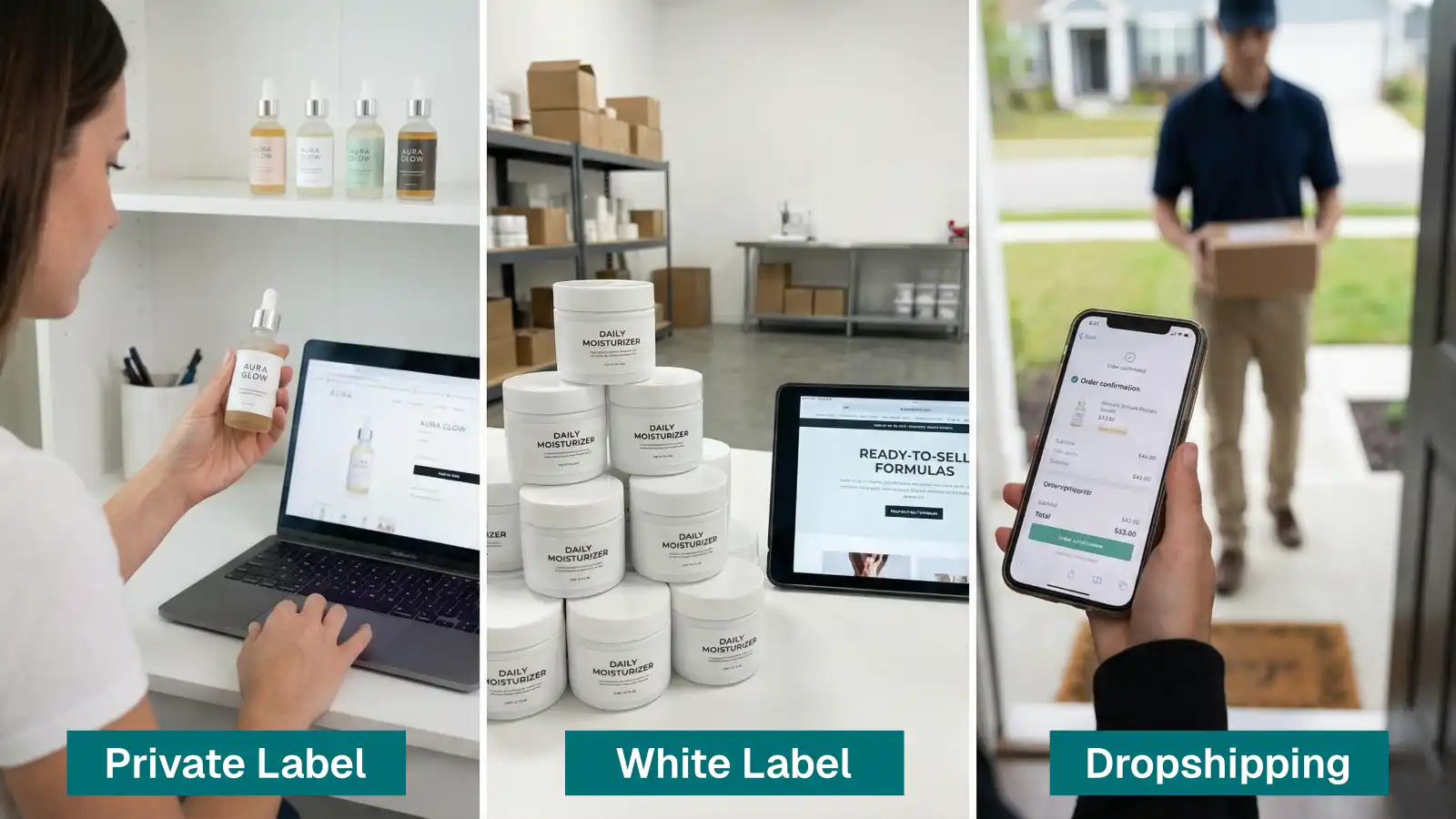
There are three primary models that make it possible to run a skincare brand without touching a single unit of physical product. Each has its own structure, advantages, and tradeoffs.
1. Private Label Skincare
Private labels are one of the most common starting points for serious skincare brands.
The idea is simple. Manufacturers already have ready-made formulas such as cleansers, serums, moisturizers, and SPF products. Instead of creating a product from scratch, you apply your own branding. Your logo, your packaging, and your brand identity go on the product, while the manufacturer handles production and often fulfillment.
What makes a private label attractive is the balance it offers. You save time and money by not developing formulas from zero, but you still build a brand that customers recognize as yours.
Private label skincare works particularly well for:
- Creators and influencers who already have an audience and want to monetize it with branded products.
- Entrepreneurs entering focused niches like clean beauty, men’s skincare, or acne solutions
- Business owners adding skincare as an additional revenue stream
Some suppliers still require minimum order quantities, which can limit flexibility early on. Platforms like BrandMeNow remove this constraint, making it possible to sell on demand without holding stock.
2. White Label Skincare
White label is closely related to private label, but with one important distinction: the product formula is standardized and sold as-is to multiple brands. You’re not the only brand using that specific formula, other sellers may have the same serum under their own label.
Because there is no formula customization, this model is usually faster and more affordable. It is a practical option if your goal is to launch quickly and test the market without heavy upfront investment.
The tradeoff is differentiation.
If multiple brands are selling the same product, your positioning, messaging, and customer experience become the deciding factors. Your brand story carries more weight than the product itself.
3. Dropshipping Beauty Products
Dropshipping is the lightest-touch version of inventory-free selling. You list products in your online store, a customer places an order, and your supplier ships directly to them. You do not store, pack, or handle anything.
In the beauty space, dropshipping works well for testing new products or niches before committing to a branded line. However, pure dropshipping, where you’re reselling another brand’s products without any customization, doesn’t build long-term brand equity. Customers are loyal to the product’s original brand, not yours.
The stronger approach is to combine dropshipping with branding. That means using the logistics of dropshipping while selling private or white label products under your own name.
Step-by-Step: How to Start Your Skincare Brand
This is what it looks like to go from zero to a launched skincare brand without inventory.
Step 1: Choose a Skincare Niche
The biggest mistake new skincare entrepreneurs make is trying to serve everyone. Broad brands lose to focused ones, especially in the early stages when you’re building trust with a specific audience.
A niche is not just a product category. It is a person. Their skin concerns, lifestyle, values, and the language they use when they talk about skincare. The clearer this picture, the sharper your brand becomes.
Some of the highest-performing skincare niches in 2026:
- Clean beauty for sensitive skin, fragrance-free, minimal ingredient lists, dermatologist-backed
- Men’s skincare, still an underpenetrated market with strong growth
- Anti-aging for women 35+, high purchase intent and premium pricing
- Acne-prone skin care, ingredient-conscious buyers highly active on social media
- Postpartum and pregnancy-safe skincare, tied to a specific life stage
Your niche should sit at the intersection of what you know, what your audience cares about, and real market demand.
Step 2: Select Products to Sell
Once you know your niche, choose 2 to 5 products to launch with. Starting lean helps you validate demand, gather feedback, and build initial sales before expanding.
Focus on skincare staples first, products people repurchase consistently:
- Daily moisturizer or hydrating cream
- Gentle facial cleanser
- Targeted serum (vitamin C, hyaluronic acid, niacinamide)
- SPF moisturizer
- Eye cream or treatment product
Many platforms provide access to curated catalogs of top-selling products. Start with proven products, then expand based on what resonates with your audience.
Always order samples before selling. You need to understand the texture, scent, absorption, and packaging before putting your name on it.
Step 3: Create Your Brand Identity
Brand identity is where many first-time founders underestimate the work, and where the right platform can make a difference. It is not just a logo. It includes your visual language, tone, colors, and packaging.
A strong skincare brand should clearly communicate who it is for, what it does, and why it can be trusted. There are tools available that can help you generate brand assets such as names, logos, and mockups quickly, but the focus should be on clarity and consistency.
Before launching, make sure the core elements of your brand are well defined. Your brand name should be memorable and easy to spell. Your logo should be clean, scalable, and readable across different sizes.
Your color palette should be limited to two or three consistent colors that work across packaging, your website, and social media. Your brand voice should also be clear, whether it is clinical and authoritative, warm and approachable, or direct and science-backed.
Step 4: Launch Your Online Store
Your store is your brand’s home base. For skincare brands, Shopify is the standard. It handles payments, inventory sync, mobile optimization, and customer accounts with minimal effort.
Key pages to include:
- Homepage, clear value proposition, featured products, social proof
- Product pages, ingredients, usage, and results
- About page, your story and brand purpose
- FAQ, common questions, shipping, and returns
Some platforms integrate directly with ecommerce tools and handle fulfillment, allowing you to focus on marketing and sales. Before going live, test everything. Place a test order, check emails, and confirm payments work.
Step 5: Market to Your Audience
Even great products need visibility. Marketing is what drives growth, especially for inventory-free brands.
Content-driven marketing works best in skincare. Around 82% of consumers use social media for product discovery, and 55% of Gen Z have purchased directly through these platforms.
Effective strategies:
- Educational content, skin tips, ingredient breakdowns, routines.
- Before-and-after results, real proof builds trust.
- Micro-influencers, smaller creators with higher engagement.
- Email and SMS, build retention and repeat purchases.
- User-generated content, encourage sharing and repost it.
If you already have an audience, use it as your starting point. Early traction often comes from people who already trust your content.
Best Platforms to Launch a Skincare Brand Without Inventory
Not all platforms are the same. Here is a breakdown of the most viable options in 2026, depending on your starting point and goals.
1.BrandMeNow
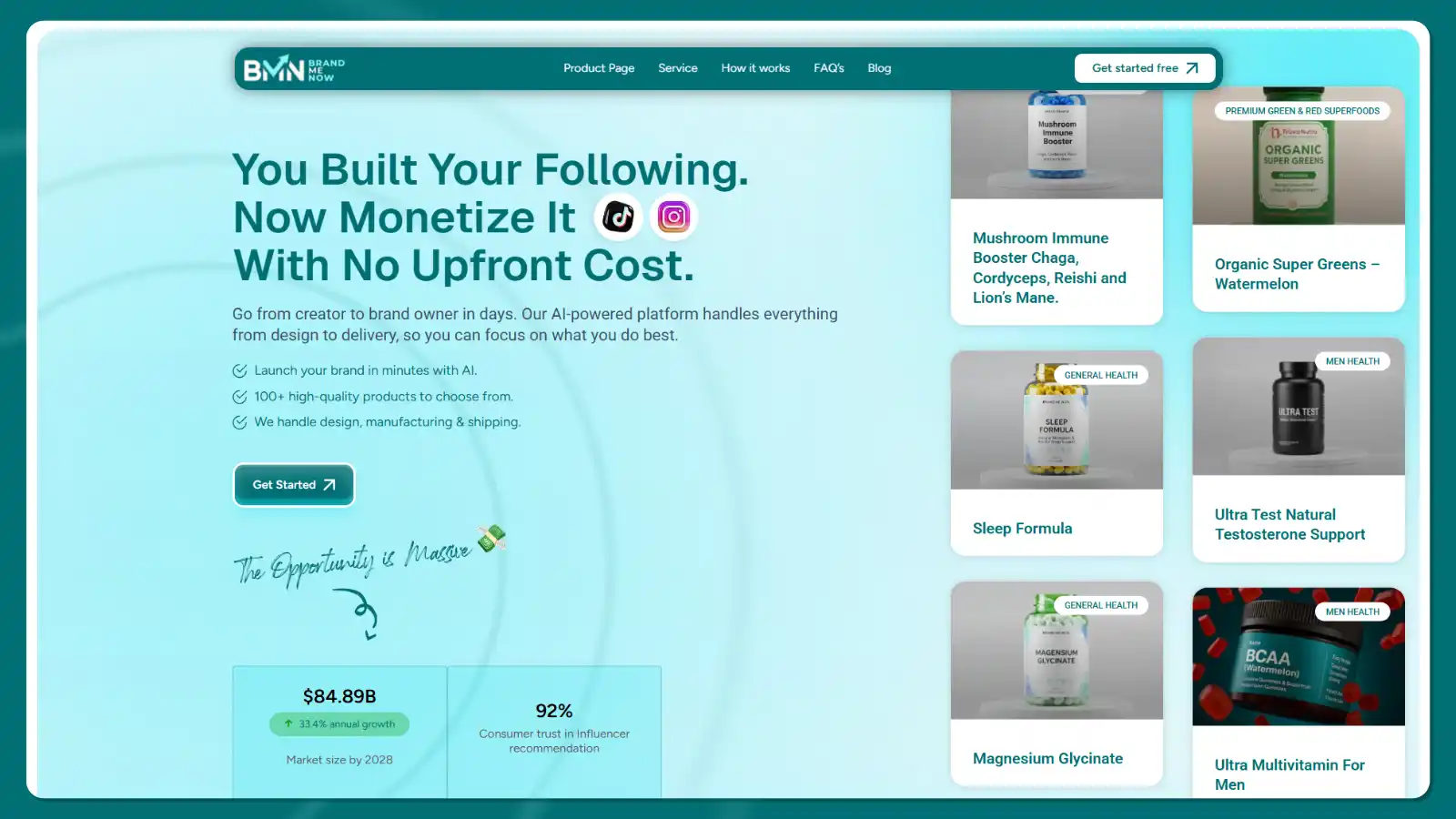
Built for creators and entrepreneurs who want to go from an idea to a live store without upfront inventory. The platform helps generate brand assets, provides access to a curated product catalog across skincare, supplements, and wellness, and handles manufacturing and shipping.
Best for: creators, influencers, and first-time founders looking for a structured, all-in-one setup.
2.Supliful
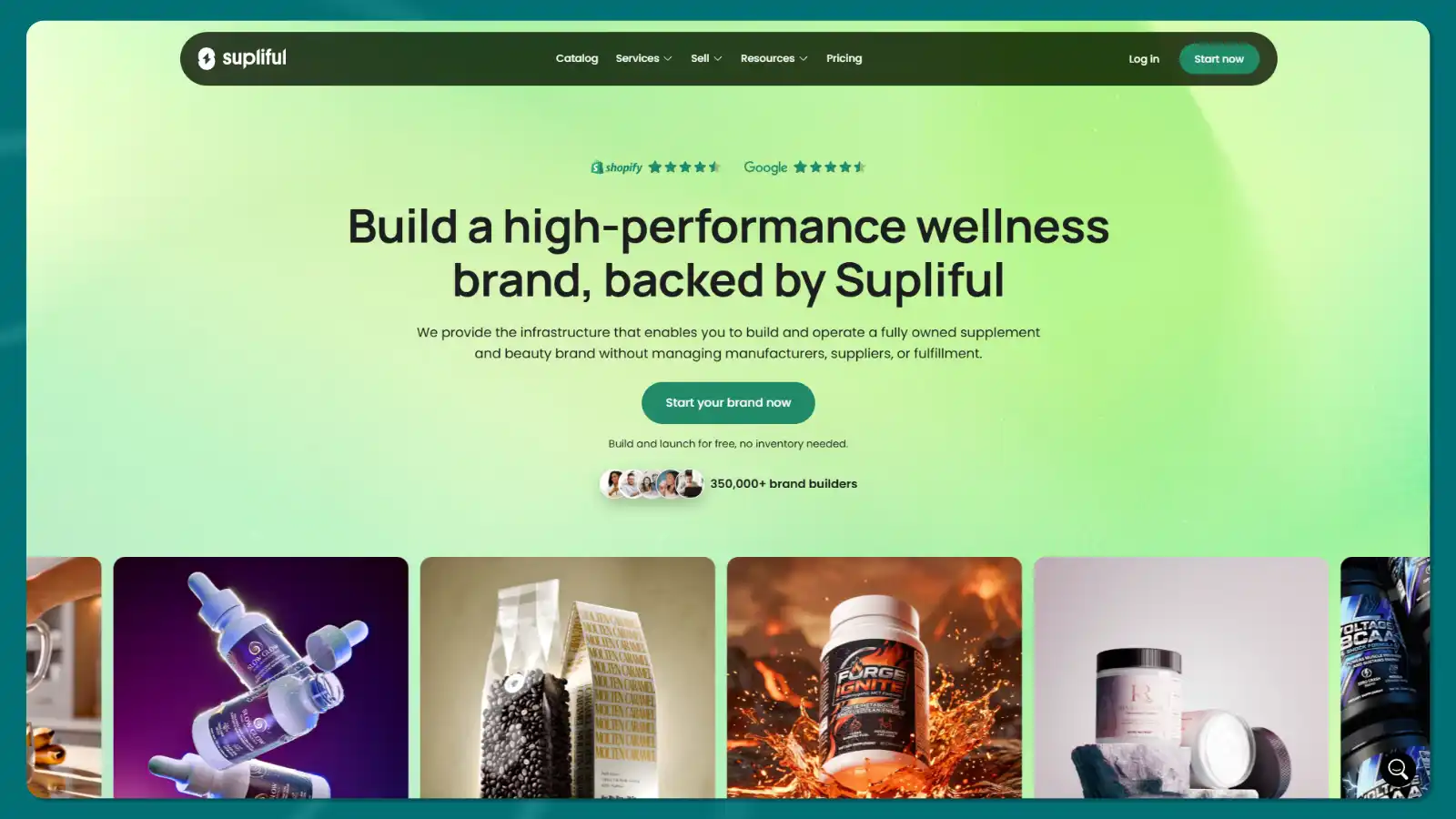
Focused on health, wellness, and skincare with private label dropshipping. It offers no minimum order requirements, integrates with Shopify and WooCommerce, and has a straightforward onboarding process.
Best for: wellness-focused brands and entrepreneurs who want flexibility in product selection.
3.Blanka
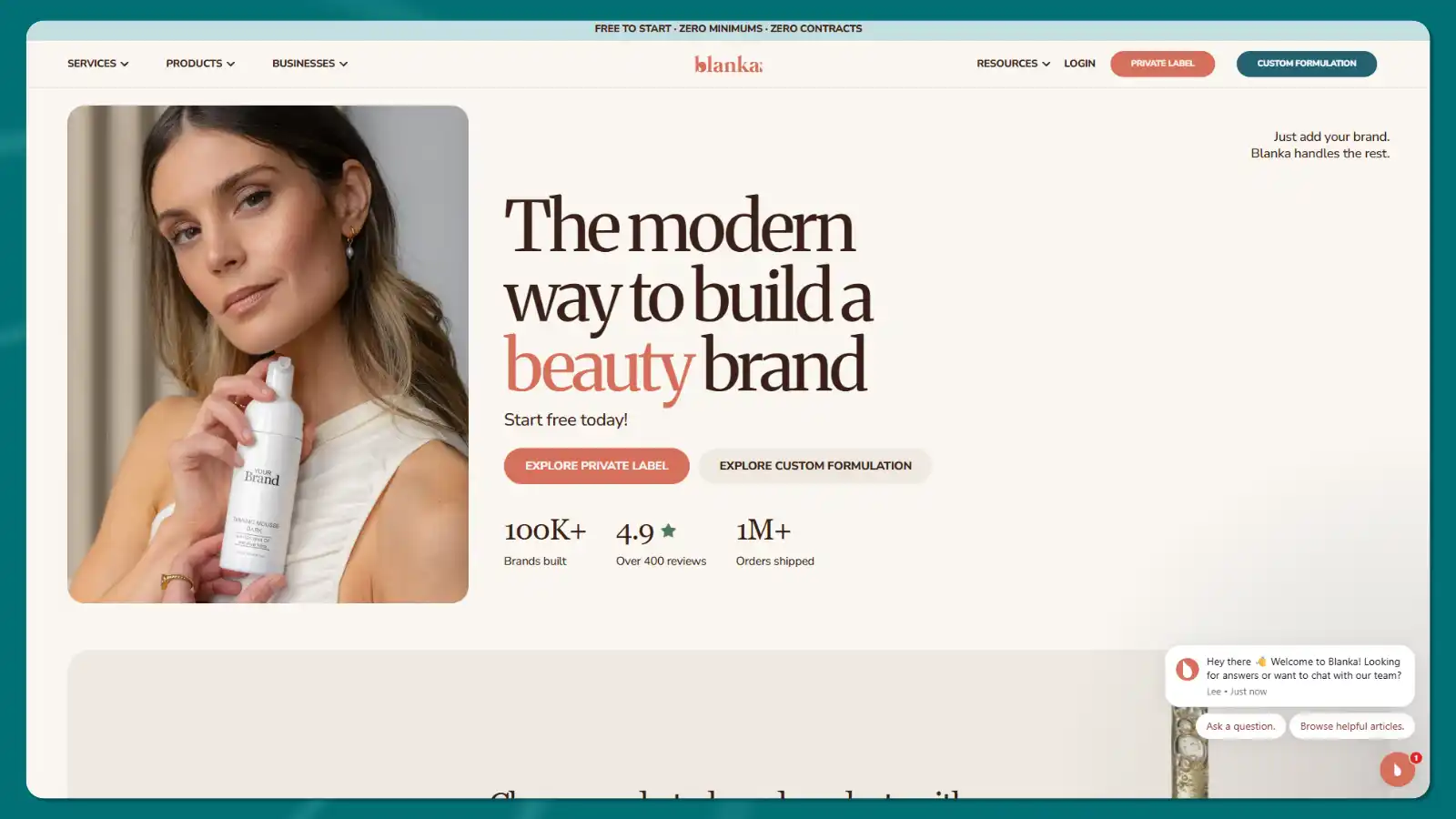
A North America-based platform offering a wide range of private label cosmetic products, including skincare and haircare. It supports fast white labeling without inventory requirements.
Best for: entrepreneurs targeting the premium beauty segment, especially in North America.
4.Selfnamed
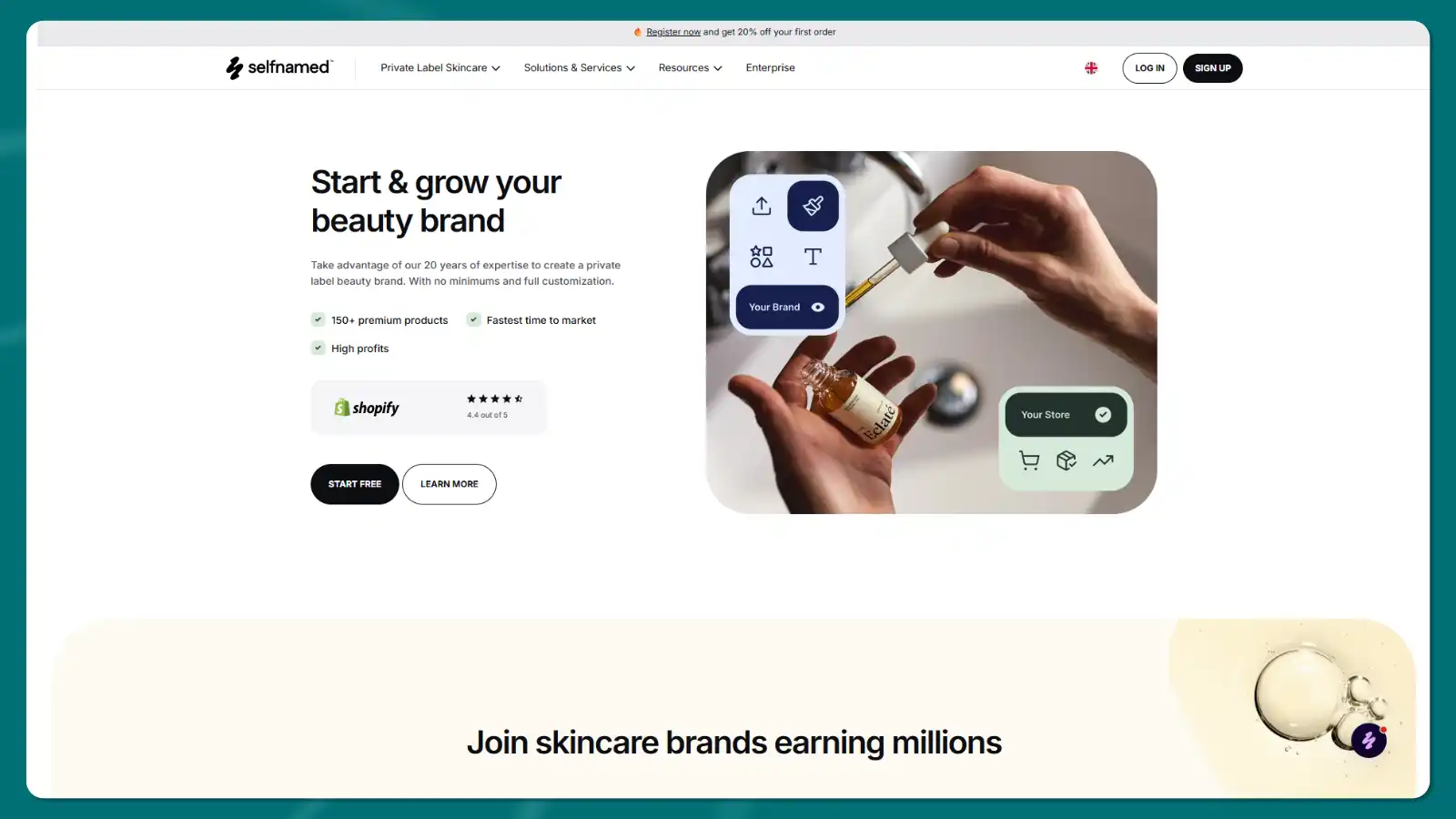
A European platform focused on clean, vegan, and cruelty-free formulations. It offers strong packaging customization and does not require minimum orders.
Best for: brands focused on clean beauty and sustainability.
5. Shopify with third-party suppliers
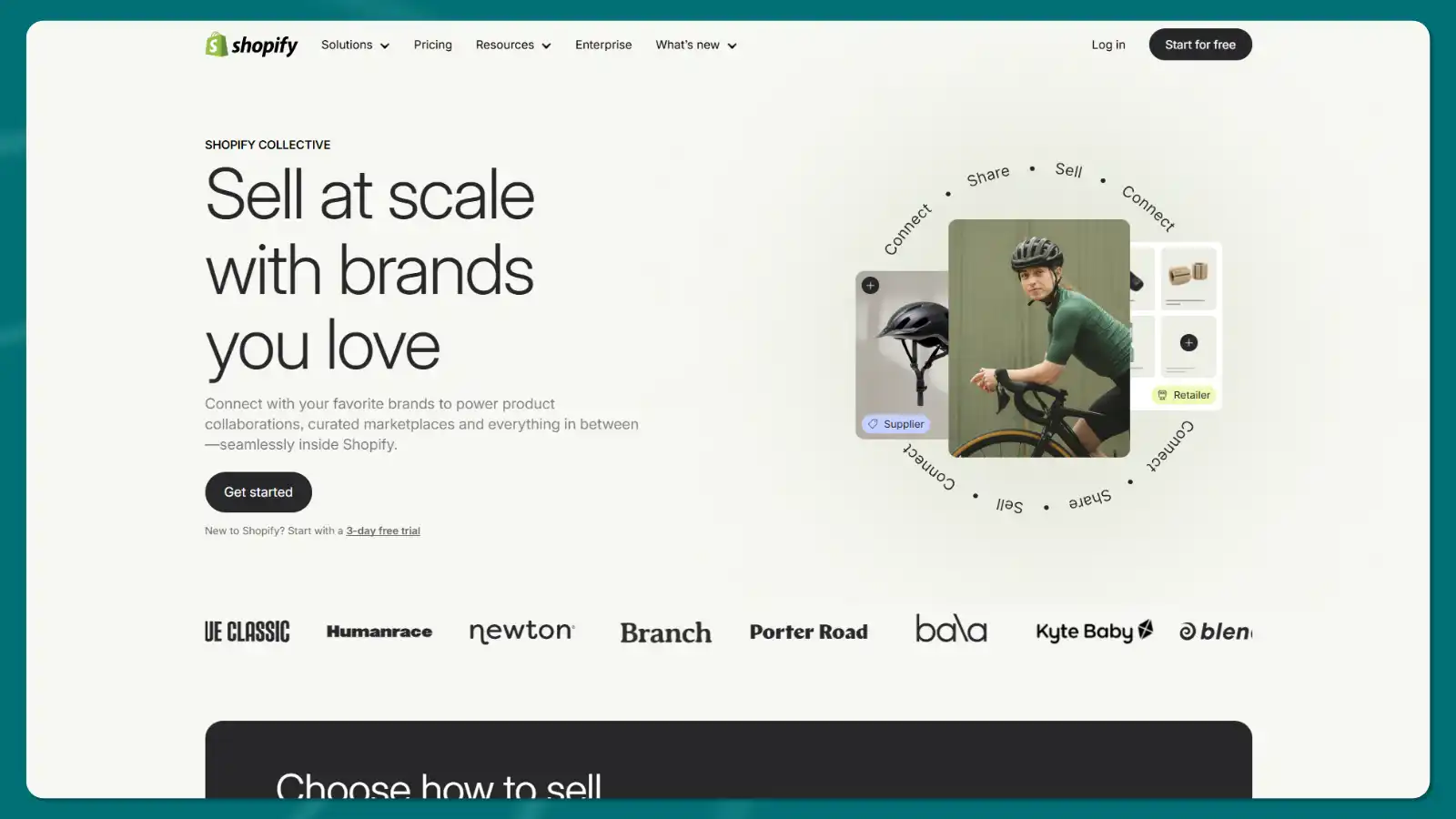
For those who want more control, Shopify can be combined with independent suppliers sourced through directories like Alibaba or Keychain. This approach requires more effort in sourcing and coordination but offers flexibility.
Best for: experienced entrepreneurs who want full control over suppliers and operations.
Common Mistakes When Starting a Skincare Brand
The low barrier to entry in inventory-free skincare cuts both ways. It allows more people to start, but it also leads to the same avoidable mistakes. These are the ones that stop brands before they gain traction.
1. Skipping the sample review
Always test the product before selling it. You cannot build a trusted brand around something you have never used. Understand how it feels, smells, and performs.
2. Launching without a clear audience
Generic positioning leads to weak results. The more clearly you define your audience, the easier it becomes to market, price, and retain customers.
3. Over-extending the product range too early
Launching with too many products creates complexity without results. Start with 2 to 5 products and focus on making them work before expanding.
4. Ignoring regulatory compliance
Even with private label, you are responsible for meeting regulatory standards such as Food and Drug Administration requirements or other local regulations. Work with suppliers that provide GMP-certified and lab-tested products, and ensure your labels are compliant.
5. Treating marketing as an afterthought
A live store does not bring customers on its own. Marketing should start before launch and continue consistently. Content, community, and email drive long-term growth.
Final Thoughts
The skincare industry is growing fast, but more importantly, it is now accessible. You no longer need manufacturing connections, lab access, or large capital to get started.
The inventory-free model, especially through private label and white label platforms, removes many of the financial and operational barriers that once limited entry. Today, the question is not whether you can launch a skincare brand without inventory. It is whether you are building a brand people actually care about.
That comes down to a few fundamentals. A clear niche. Products your customers genuinely want. Packaging and branding that build trust at first glance. Marketing that shows real results. The infrastructure is already in place. The brand is what you need to build.
This is where platforms like BrandMeNow fit in. It brings brand creation, product selection, store setup, and fulfillment into one workflow, reducing operational complexity so you can focus on positioning, marketing, and sales.
FAQs
1. Do I need to create my own formula?
No. Most inventory-free skincare brands use pre-formulated, tested products provided by manufacturers. Your role is to build the brand, not develop formulas from scratch.
2. What kinds of skincare products are best for a first launch?
Start with essential, high-demand products that customers regularly repurchase. These include moisturizers, cleansers, serums such as vitamin C or hyaluronic acid, SPF products, and eye creams.
3. Is it profitable to start a skincare brand without inventory?
Yes, it can be profitable because you avoid upfront costs like bulk inventory and storage. Profitability depends on your pricing, brand positioning, and marketing strategy.
4. What platform is best to start a skincare brand without inventory?
While platforms like Supliful and Blanka offer private label and dropshipping capabilities, BrandMeNow provides a more integrated approach, bringing branding, product selection, and fulfillment together in one place.