What Is a White Label Supplement Brand?
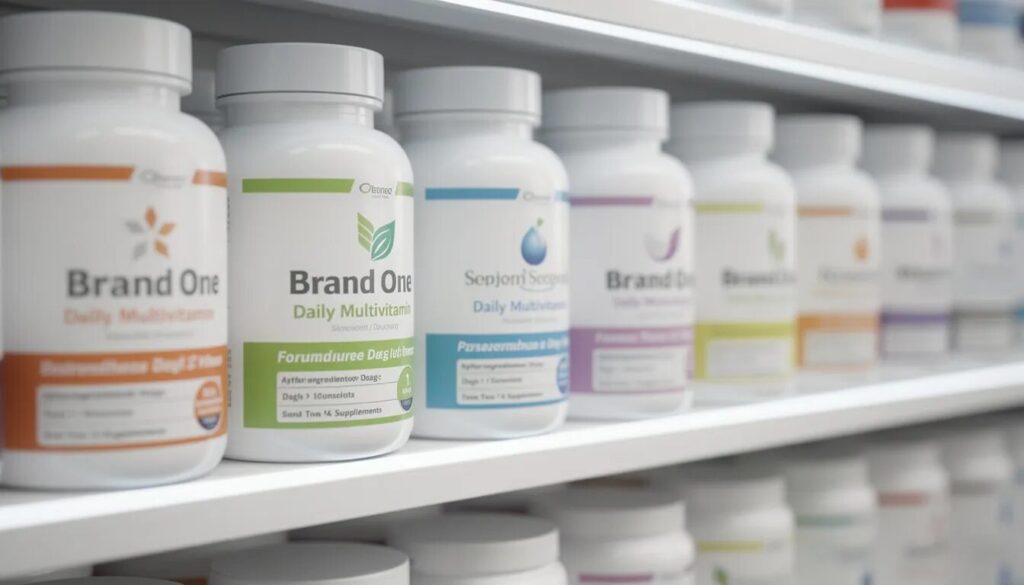
A white label supplement brand sells products where the manufacturer owns the formula and production process, allowing businesses to simply rebrand and resell. You’re not creating anything new—you’re taking an established product and making it yours through branding and marketing efforts.
The manufacturer develops and produces the same formula for multiple businesses. Think of a standard 5g creatine monohydrate product or a basic collagen peptide powder. These formulas exist in supplier catalogs, and any brand can purchase and relabel them.
The typical scope of customization is limited to label design, your own brand name, logo placement, flavor naming, and sometimes packaging color or container style. The core product design remains unchanged.
Ingredients, dosages, and formulation are fixed. You generally cannot request higher vitamin doses, swap out certain ingredients, or create custom formulations. These limitations exist to keep costs low and avoid additional regulatory work.
Common product types offered as white label include multivitamins, basic protein powders, BCAAs, standard pre-workouts, collagen supplements, omega-3 capsules, and simple gummy vitamins.
Advantages of White Label for Influencers
White label fits creators who want a simple, low-risk entry point into supplement sales without a significant investment in product development.
Lower startup costs make white label accessible for most creators. Unlike private label products that often require thousands of units, you can frequently launch with just a few hundred units. This means you can test market demands without committing substantial money upfront.
Speed to market is perhaps the biggest advantage. Realistic lead times range from 4-8 weeks from design approval to first shipment for many white label suppliers. Compare that to the months required for custom formula development.
Operational simplicity removes major headaches. You don’t need to handle R&D, stability testing, complex regulatory formulation work, or sourcing raw materials. The manufacturer manages the entire production process and typically handles regulatory compliance documentation.
White label is ideal for testing whether your target audience will actually buy supplements before investing in a fully custom product line. If demand proves weak, you haven’t sunk months of development time and significant capital into new products that won’t sell.
Limitations of White Label for Building a Personal Brand
The same formula you’re selling might appear under multiple brands at different price points. Your followers could find look-alike products on Amazon or at a local health store, sometimes at lower prices.
Limited differentiation means you’re primarily competing on branding, storytelling, and community rather than on product uniqueness. In a market with over 10,000 complementary medicine products, standing out becomes challenging when your formula is identical to competitors.
Tweaks to flavor, ingredients, or dosage are often minimal or not allowed. If your audience has specific needs—vegan formulations, allergen-free options, or specific performance goals—you may struggle to meet those consumer preferences with white label products.
Perceived authenticity can become an issue. If followers discover the same product under another label at a cheaper price, trust erodes quickly. This is particularly damaging for influencers whose entire business depends on audience trust.
White label may cap long-term brand equity and valuation. Because you don’t own the underlying formulations, your brand’s identity is harder to defend, and potential acquirers or investors may value the business lower than a company with proprietary products.
What Is a Private Label Supplement Brand?
Private label manufacturing creates products specifically for one influencer or brand. The resulting formula belongs exclusively to you—no other company can sell products with your exact formulation.
Private label formulas are custom or semi-custom. Your manufacturer won’t sell your unique blend to other retailers, giving you a competitive edge in the market that white label simply cannot match.
Typical private label decisions include:
- Active ingredients and their sources
- Dosages and ratios
- Flavors and sweeteners
- Delivery format (capsule, powder, gummy, liquid)
- Packaging style and materials
- Third-party testing and certifications
While the manufacturer produces the product, your brand owns the unique product identity. You can defend it against copycats and build genuine customer loyalty around something competitors cannot replicate.
Consider an influencer who trains a community focused on HIIT and strength workouts. Through private label services, they could collaborate with a manufacturer to create a signature pre-workout with a custom formula featuring specific caffeine levels, beta-alanine dosing, and a flavor profile that matches their brand’s values—maybe a tropical blend that fits their beach lifestyle content aesthetic.
Advantages of Private Label for Influencers
The benefits of private label center on audience trust, differentiation, and building something that can sustain your business goals long-term.
Strong differentiation lets you create products addressing your community’s specific needs. Whether that’s dairy-free protein, stimulant-free pre-workout, sugar-free gummies, or specific botanical ingredients for women’s hormone health, you have more control over every detail.
Higher perceived authenticity matters enormously for creators. When followers see your product as a true reflection of your values, training philosophy, and wellness approach, they connect more deeply with your brand. This isn’t just another product you’re hawking—it’s genuinely your own creation.
Better quality control comes with private label territory. You can select ingredient grades, specify testing standards for heavy metals and banned substances, and require third-party certifications. For fitness influencers whose followers may be competitive athletes, this control over quality becomes essential.
Stronger profit potential and brand valuation emerge because custom products are harder to copy and can justify premium pricing. Research suggests retailers can see 25-30% higher gross margins with private label products compared to reselling manufacturer brands. That difference compounds over years of sales.
Challenges of Private Label for Creators
Higher upfront costs come with the territory. Custom formulations require R&D investment, and minimum order quantities are typically larger than white label options. More complex packaging runs add to initial expenses, often requiring a more significant investment than many newer creators can comfortably make.
Longer timelines mean patience is required. Realistic ranges span 3-9 months from concept to launch, especially when lab testing for stability, microbiological safety, heavy metals analysis, and compliance reviews are included. This time consuming process doesn’t suit creators needing to market quickly.
More decisions fall on your shoulders. From ingredient choices to flavor profiles to compliance wording on labels, you’re making calls that affect the final product. For creators unfamiliar with supplement manufacturing, this learning curve can feel steep.
Higher operational complexity extends beyond launch. Inventory planning becomes more critical with larger MOQs. Reorders require more lead time. If regulations change or ingredient availability shifts, you may need to handle reformulation.
Private label works best for influencers with an established, highly engaged audience and a clear long-term brand vision. If you’re still figuring out your niche or testing audience response, the investment may be premature.
Cost, Risk, and Profit: Comparing the Two Models
Influencers must weigh budget realities, risk tolerance, and revenue goals when choosing between white label and private label supplements. Neither model is universally better—the right choice depends on your specific situation.
White label typically involves lower minimum order quantities and smaller upfront investment. You can test whether your audience will actually buy supplements without committing thousands of dollars. However, lower differentiation means you’re competing primarily on price and personal brand, which can squeeze margins.
Private label usually requires larger initial orders and R&D costs. But the payoff includes higher per-unit margins and stronger brand loyalty. When your product is unique, you face less direct price competition and can command premium positioning.
| Factor | White Label | Private Label |
|---|---|---|
| Initial Investment | Lower (hundreds to low thousands) | Higher (thousands to tens of thousands) |
| Time to Launch | Fast (4-8 weeks) | Slower (3-9 months) |
| Customization Level | Limited (branding only) | High (formula, packaging, everything) |
| Long-term Brand Impact | Moderate | Strong |
| Competition Risk | Higher (same formula as others) | Lower (exclusive product) |
One critical consideration: base your projections on realistic sell-through rates tied to actual engagement metrics, not total follower counts. An influencer with 50,000 highly engaged followers who regularly purchase recommended products may outsell someone with 500,000 passive followers.
Branding, Trust, and Audience Fit
Follower trust is the most important asset you have as an influencer selling supplements. Every product decision either strengthens or weakens that trust. This reality should guide your choice between both white label and private label approaches.
White label products require exceptional storytelling, positioning, and transparency to overcome the fact that formulas are shared across multiple companies. You must give your audience a compelling reason to buy from you rather than finding the same product elsewhere. Your personal relationship with followers, your content around the product, and your honesty about what the product is (and isn’t) become your primary differentiators.
Private label lets you align product identity with your unique positioning. A biohacking-focused creator can formulate nootropics with specific ingredient stacks their audience recognizes from their content. A plant-based lifestyle influencer can ensure every ingredient meets their ethical standards. An endurance athlete can create recovery supplements matching their training methodology.
Consider your content style and what brands aiming for authentic connections should emphasize:
- Science-focused educators may need private label to back up specific claims
- Lifestyle vloggers might succeed with white label paired with strong aesthetic branding
- Pro athletes often require private label for banned substance testing control
- Wellness coaches should match product philosophy to their teaching approach
Regardless of which model you choose, be explicit about testing, certifications, and ingredient sourcing. Educated consumers scrutinize supplements before purchasing, and transparency builds customer loyalty that lasts.
How Influencers Should Decide: A Simple Framework
Rather than agonizing over the perfect choice, use this practical framework to guide your decision based on where you actually are in your creator journey.
Newer or mid-tier influencers with limited capital and uncertain demand should start with one or two white label SKUs to validate interest. This approach lets you learn the logistics of selling supplements- inventory management, customer service, shipping—without a massive financial commitment. If products sell well, you’ve proven market research validity.
Established influencers with over 100,000 highly engaged followers, recurring brand sponsorship demand, or proven merch sales history should consider moving to private label sooner. You’ve already demonstrated that your audience trusts you enough to buy what you recommend. A unique product becomes a natural extension of that relationship.
Map your business goals clearly. Are you looking for quick monetization to supplement sponsorship income? Or are you building a long-term wellness or performance brand that can outlive your social media presence and potentially be sold one day?
Ask yourself these guiding questions:
- How quickly do you need to launch? If speed matters most, white label wins. If you can wait 6+ months, private label becomes viable.
- How unique must your product be? If your audience has specific needs not met by existing formulas, private label is worth the investment.
- What can you realistically invest upfront? Be honest about cash flow. A cost effective white label start beats an overextended private label launch.
- How long do you plan to stay in this niche? Short-term monetization favors white label. Decade-long brand building favors private label.

Getting Started with Your First Supplement Line
The first launch is often the hardest step for creators. Analysis paralysis, fear of failure, and manufacturing complexity can delay action indefinitely. Here’s how to move forward regardless of which model you choose.
Both models share fundamental early steps:
- Define your audience’s biggest problem. What does your community struggle with that a supplement could address? Energy? Recovery? Sleep? Focus? Gut health?
- Choose a product type that matches that problem. Don’t launch a pre-workout because it seems popular—launch it because your followers need energy for morning workouts.
- Align product claims with real science. Ensure any benefits you communicate are supported by legitimate research on the ingredients you’re using.
Research manufacturers with experience serving influencer or DTC brands. Verify their facilities operate under proper standards, confirm certifications, and understand minimum order quantities before committing. Some manufacturers handle both white label and private label services, which can simplify future transitions.
Label design should reflect your brand’s identity across platforms. Colors, fonts, tone, and taglines should feel consistent with your Instagram aesthetic, YouTube thumbnails, and overall visual language. Your followers should immediately recognize the product as yours.
Plan launch content in advance:
- Announcement posts building anticipation
- Behind-the-scenes content showing formulation decisions (especially valuable for private label)
- FAQ content addressing common concerns
- Early tester testimonials from friends, family, or community members
- Ongoing content demonstrating product use in your actual routine
Your online store setup, additional marketing materials, and customer service processes should all be ready before products ship. A smooth launch creates momentum that carries sales forward.