What Does It Mean to Sell Products Online Without Inventory?

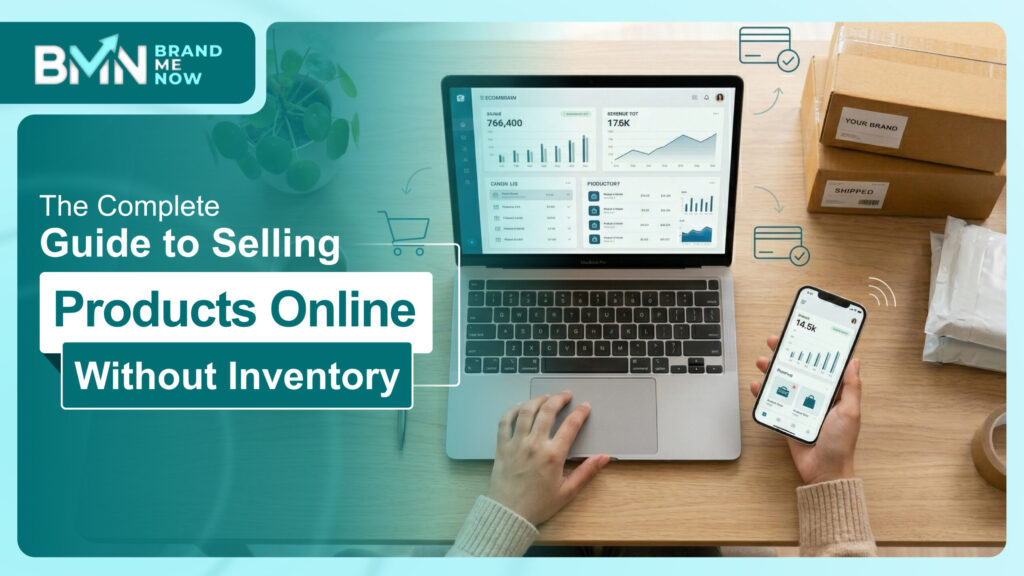
Selling products online without inventory means you market and sell physical goods without storing or shipping them yourself. A supplier, manufacturer, or platform handles warehousing and fulfillment.
You earn the margin between what a customer pays and what you owe the supplier. Models include dropshipping, print-on-demand, private label through third-party logistics, and digital products.
Understanding the Inventory-Free Business Model
The core mechanic is straightforward: a customer places an order on your store, that order is automatically or manually forwarded to a supplier or fulfillment partner, and the supplier ships the product directly to the customer. Your role is positioned entirely at the front end: marketing, branding, customer service, and pricing.
The supplier takes a cut (their cost), and you keep the difference. Whether you’re using dropshipping, print-on-demand, private label with third-party fulfillment, or selling digital files, the same principle applies: you are a demand-generation business, not a logistics business.
This separation is what makes the model scalable. You can list 10 products or 1,000 without any change to your physical overhead.
Why This Model Is Growing in 2026
This model is scaling because the infrastructure behind it finally works. Global ecommerce has crossed multi-trillion dollar levels, but more importantly, access has opened up.
You now have global fulfillment networks, faster shipping in markets like India, and tools that automate most of the backend. AI has also reduced the cost of building a brand. What used to take a designer, developer, and weeks of work can now be done in hours.
That combination is why e-commerce without inventory is no longer a workaround. It’s becoming the default starting point.
Who Should Start an Online Business Without Inventory
This model fits people who already have marketing skills or an audience, creators, influencers, and side hustlers who can drive traffic before they have a polished product. It also suits low-capital starters who want to test before committing to bulk inventory.
It’s not the right fit for everyone. If you want full control over your supply chain, need ultra-specific product tolerances, or want to manufacture something with no existing equivalent, inventory-free models will frustrate you. And if you’re not willing to spend time on brand-building and marketing, the margins won’t compensate for the lack of differentiation.
Benefits of Selling Products Without Inventory

1. Low Costs and Minimal Risk
Traditional ecommerce usually means investing a high amount in inventory before you even know if a product will sell. Inventory-free models flip that completely.
You can launch with minimal upfront cost, sometimes just a basic store setup, and only pay when you actually make a sale. This removes the biggest barrier that stops most creators from starting in the first place.
2. No Warehousing or Logistics Headaches
You don’t have to deal with storage, packing, shipping, or returns. Those hidden operational tasks consume time and money in traditional setups. When fulfillment is handled by suppliers, you can focus on what actually grows the business, content, marketing, and improving your product.
That is not a small thing. Logistics is where most small product businesses bleed time and money. Removing it from your plate lets you focus entirely on what actually grows revenue.
3. Ability to Test Products Quickly
In traditional retail, you might order 200 to 500 units before knowing if a product works. Here, you can test multiple products with almost no commitment. If something doesn’t sell, you remove it and move on. This speed reduces wasted capital and helps you find winning products faster.
4. Scalability and Automation Opportunities
Once your store is live, most operational processes can be automated. Shopify handles checkout and order management. DSers or similar apps push orders to suppliers automatically. AI brand builders can generate new product pages without a design team.
“Automated” doesn’t mean hands-off forever. It means you stop trading hours for orders and start building a system. That’s the difference between a job and a business.
Best Business Models to Sell Products Online Without Inventory
1. Private Label (Best Long-Term Strategy)
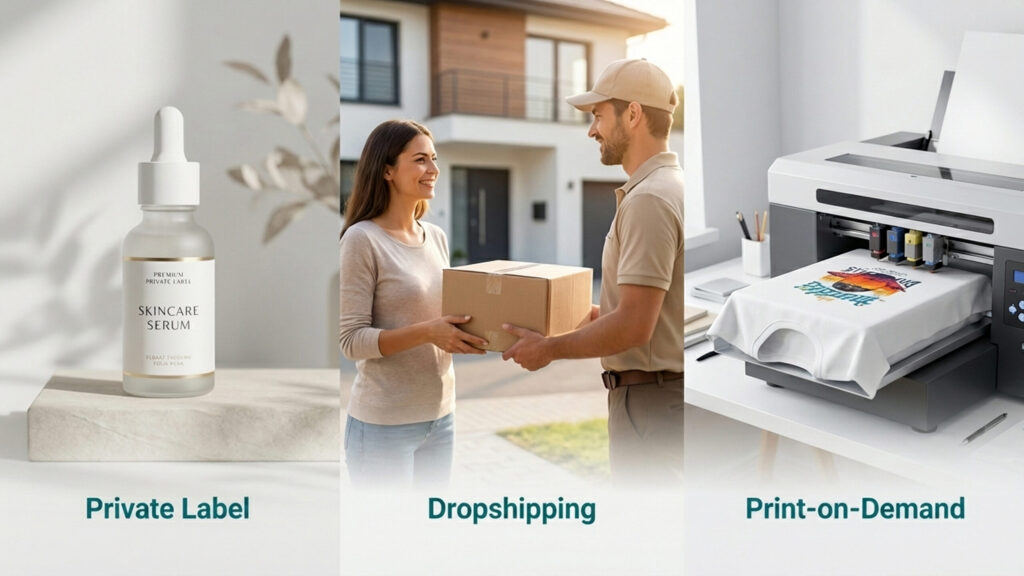
Private label means putting your brand on a product that a manufacturer already produces. The formula and sourcing are theirs. The name, label, and customer relationship are yours.
Here’s how it works without inventory: the manufacturer warehouses the product, and when a customer orders from your store, they ship it directly to the buyer. You never touch the product. You build the brand around it.
Why does this build more equity than dropshipping? Because customers who love your product are buying into your brand, not a generic SKU they could find on 50 other stores. That brand loyalty creates repeat purchases, higher lifetime value, and something you can eventually sell, license, or expand.
Platforms like BrandMeNow handle this end-to-end: you choose from a catalog of products, their AI builds your store and labels, and orders ship without you touching a single box. It’s the fastest way to go from idea to launch a private label brand.
The downside is that the setup takes longer than dropshipping. You won’t be live in a day. Branding, approval, and store configuration take one to three weeks. But you’re building something with real defensibility, not just a reseller page.
2. Dropshipping
Dropshipping is the most accessible entry point. You list products from a supplier in your store, and when someone orders, the supplier ships directly to the customer. You keep the difference between retail and wholesale price.
Realistic margins are 10-30%. The timeframe to first sale is often under a week. Those are the strengths. The weaknesses are real: margins are thin because you have no pricing power, competition is brutal because anyone can copy your store in an afternoon, and you’re entirely dependent on supplier reliability for shipping times and product quality.
Best for product testing, learning the mechanics of ecommerce, and launching when capital is close to zero. Not a long-term brand strategy on its own.
3. Print-on-Demand (POD)
Print-on-demand is a subset of dropshipping focused on customized products like t-shirts, mugs, and posters. The item does not actually exist until a customer orders it. Once they do, a digital printer applies your design to a “blank” product and ships it.
This model is excellent for artists or those with a specific niche community, like “gifts for dental hygienists.” The margins are healthy, often around 30% to 50%, because the perceived value of a unique design is higher than a mass-produced item.
Private Label vs Dropshipping: Which Is Better Without Inventory?
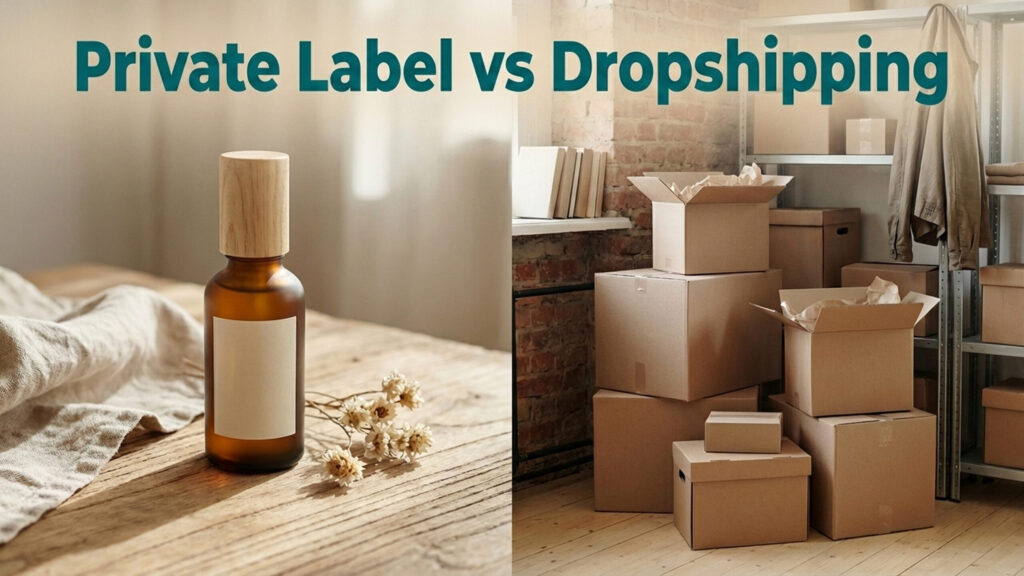
The choice isn’t as complicated as people make it. Here’s the actual breakdown:
| Factor | Private Label | Dropshipping |
| What it is | Sell products under your own brand. | Sell existing products from suppliers. |
| Control | Full control over branding and positioning | Little to no control over product or brand |
| Speed | Slower to launch and validate | Very fast to start and test |
| Differentiation | Easier to stand out and build uniqueness | Harder to stand out, easy to copy |
| Long-term value | Can become a real, sellable business | Limited long-term advantage |
| Best For | Creators with audiences, brand builders | Product testers, zero capital starters |
The honest answer is simple. Start with dropshipping if you’re low on capital and just want to learn how the game works, how to find products, run a store, and get your first sales. Once you understand what actually sells, shift your focus to private labels.
It’s not either-or. Most people who build real brands start by testing with dropshipping, then turn their winning product into a private label brand they actually own.
How to Build a Brand Without Holding Inventory
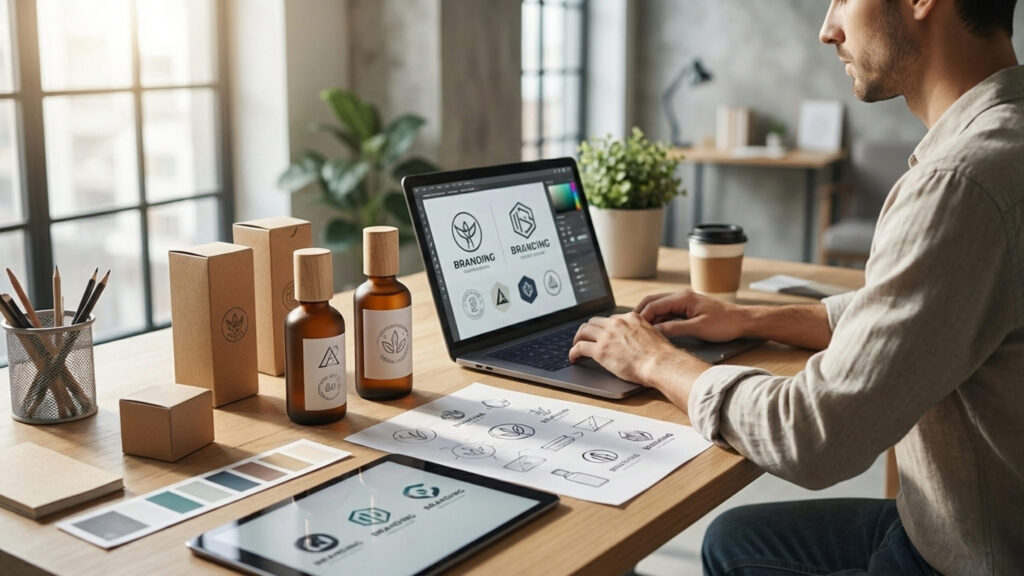
Brand-building with no warehouse starts with one decision: pick a niche specific enough that your product has a clear customer. “Health supplements” is not a niche. “Supplements for busy women over 40 who want to sleep better” is. Specificity drives every other brand decision, the name, the label, the copy, the ads.
Brand identity isn’t a logo. It’s the consistent experience a customer has every time they interact with you, the product packaging, the email they get after ordering, the copy on your website, the way you respond to a complaint. All of that can be managed without a warehouse. What you’re selling is trust, and trust is built in the details.
Trust signals matter especially when you’re fulfilling from a third-party: real product photos, transparent ingredient or material sourcing, accessible customer support, and reviews that reflect actual customer experience. The brand is real even if the inventory isn’t yours. If you’re serious about scaling your income, the best way is to monetize Instagram influencers by building your own brand.
Step-by-Step Guide to Start an Online Store Without Inventory
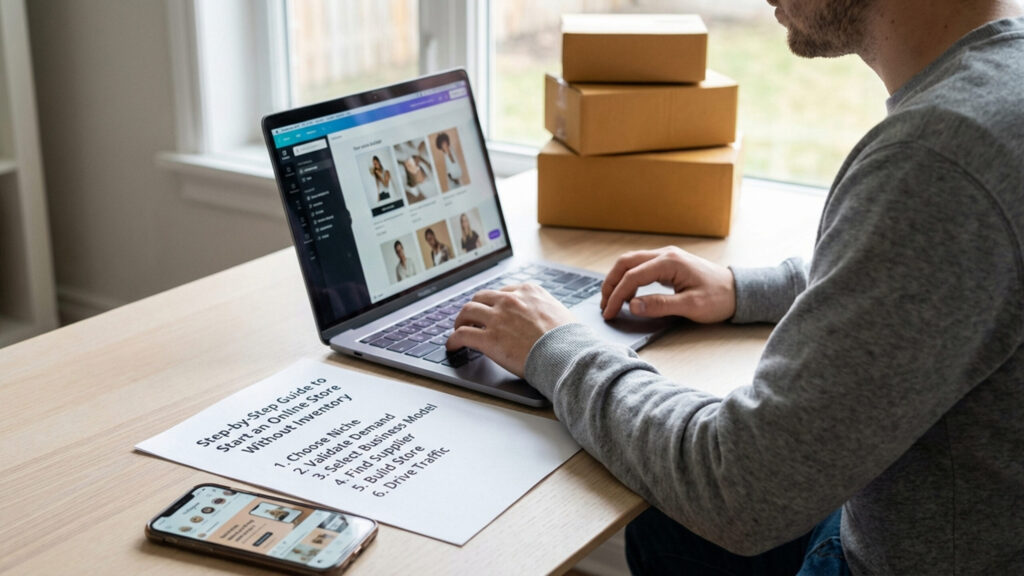
Step 1: Choose a niche and validate demand.
Pick a specific audience or interest category, not a broad product type. Validate that there is demand (search volume, active communities, existing competitors making money) and that you can reach this audience cost-effectively. If you can’t explain who your customer is in one sentence, your niche is too broad.
Step 2: Validate product-market fit before committing.
Before setting up a store, check Google Trends, Etsy search volume, Amazon best sellers, and relevant Reddit communities. Look for consistent demand, not viral spikes. One trending product does not make a business. A product with steady, growing demand over 12 months does.
Step 3: Choose the Right Model (Private Label vs Dropshipping)
This decision really comes down to two things: how much you can invest and how fast you want results. If you’re starting with very little and want to see sales quickly, go with dropshipping or print-on-demand. It’s the easiest way to learn how everything works, finding products, driving traffic, and handling customers, without taking on much risk.
If you can invest a bit more and are okay waiting longer for your first sale, private label is the better long-term move. You get more control, better margins, and something that can actually turn into a real brand. A good way to think about it: dropshipping helps you figure out what works, while private label is how you build something valuable from it.
Step 4: Find Suppliers or Use Done-for-You Platforms
For dropshipping, the main supplier networks are AliExpress (global, inconsistent quality), Spocket (US and EU suppliers, faster shipping), and Zendrop (better vetting and automation). Connect your chosen platform to your store via Shopify apps.
For private labels, you can source manufacturers through Alibaba or Faire, but coordinating branding, quality control, and fulfillment from scratch is time-consuming. Platforms like BrandMenow exist precisely for this: they handle the supply, your branded packaging, and fulfillment, so you launch faster without building the operational infrastructure yourself.
Step 5: Set up your storefront.
Shopify is the default choice for good reason: reliable infrastructure, a large app ecosystem, and native integrations with every major fulfillment tool. For print-on-demand, Etsy is a viable alternative for discovery traffic. Custom domain, professional photos, clear product descriptions, and a working checkout. That’s the baseline.
Step 6: Drive traffic.
You need at least one traffic channel. Organic social (short-form video on TikTok and Instagram Reels) works well for products with visual appeal. SEO takes 3-6 months but compounds. Paid ads (Meta, TikTok) can work with a small daily budget to test creativity. Pick one channel, go deep, and add more once the first is converting.
Conclusion
You now know the models, the trade-offs, and the path from idea to first sale. The decision in front of you is simple: pick a model that matches your current resources, start lean, and build toward brand ownership over time.
Dropshipping is the fastest way to start learning. Private labels are the fastest way to start building something with actual equity. Most people who get serious about ecommerce eventually move toward the latter.
If the private label is the direction you’re going, BrandMeNow is the logical next step, apply, choose a product from their catalog, and their system handles the rest.
Pick your model. Start this week. Don’t wait until the setup is perfect.
Frequently Asked Questions
1. Can I really sell products online without ever buying inventory?
Yes. With dropshipping and private label through a done-for-you platform, your supplier holds the stock and ships directly to the customer. You never purchase inventory upfront, and you never handle fulfillment. You pay the supplier’s cost only after a customer places and pays for an order.
2. What is the best way to start an online store without inventory?
The best way is to start with dropshipping if you want low risk and fast testing, or private label if your goal is to build a long-term brand with higher margins and customer loyalty.
3. What is the difference between private label and dropshipping?
Private label means selling products under your own brand, giving you higher margins, stronger differentiation, and long-term brand value. Dropshipping, on the other hand, involves reselling existing products with minimal upfront investment, but typically comes with lower margins and little control over branding or customer experience.
4. How do you handle returns without holding inventory?
Returns are usually handled by the supplier or fulfillment partner. You coordinate with them and provide the customer with return instructions based on the supplier’s policy.